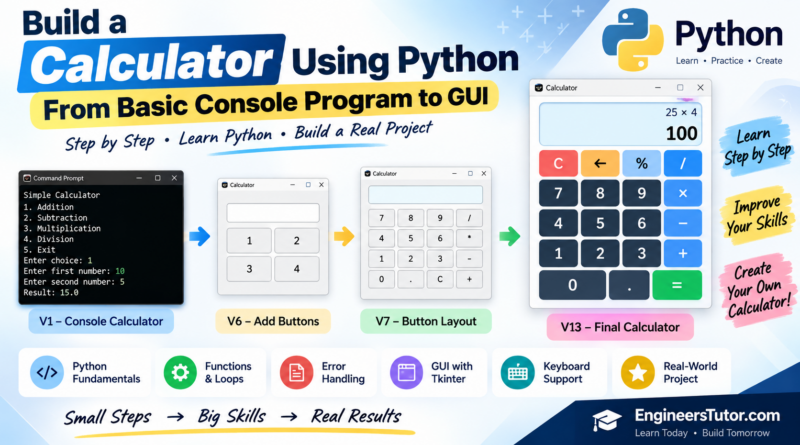
Build a Calculator Using Python — From Basic Console Program to GUI

Learn how to build a calculator using Python step by step. Start with a simple console calculator and gradually develop it into a GUI application using Tkinter. Along the way, learn Python fundamentals, functions, loops, error handling, GUI widgets, callbacks, and keyboard events.

Read more
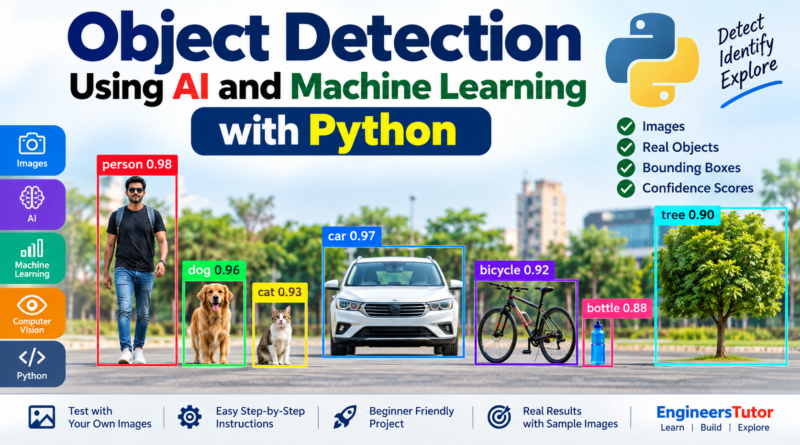
Object Detection Using Python, AI and Machine Learning

Learn how to build and test a simple object detection application using Python, AI, and machine learning. Follow the practical steps to install the required packages, run the project, detect objects in images, and understand bounding boxes, labels, and confidence scores.

Read more

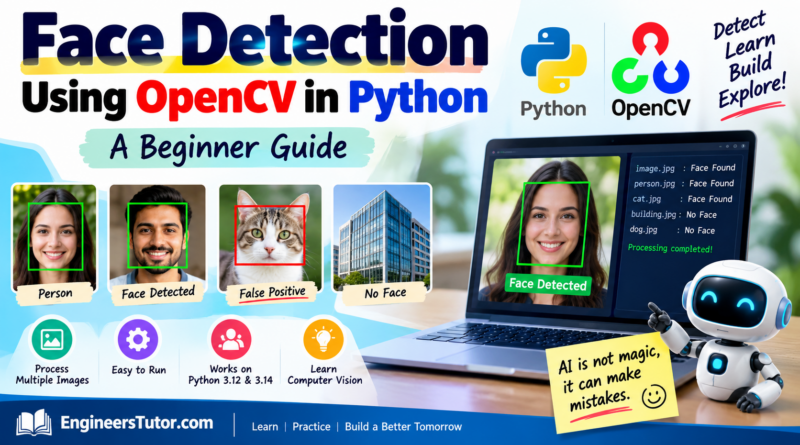
Face Detection with AI and Computer Vision Using Python

Learn how to build a simple face detection project using OpenCV and Python. This beginner-friendly guide explains how to install OpenCV, process multiple images, detect human faces, run the project on Python 3.12 or 3.14, and understand why face detection models can sometimes produce false positives.

Read more

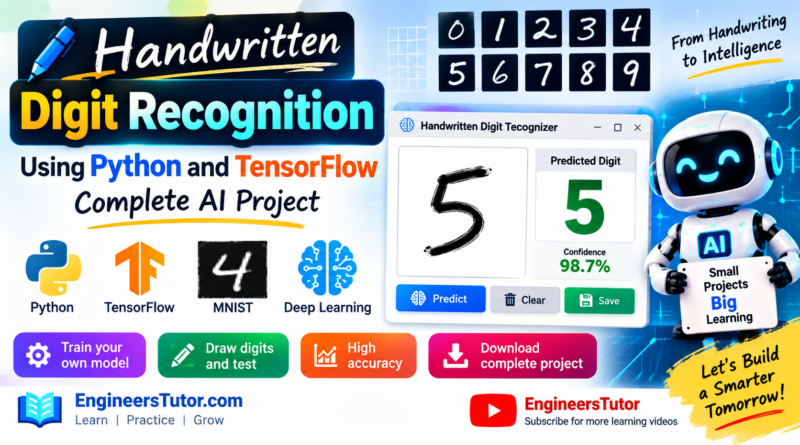
Handwritten Digit Recognition Using Python and TensorFlow – Complete AI Project

Learn how to build a Handwritten Digit Recognition system using Python, TensorFlow, CNN, and the MNIST dataset. Download the complete project, train the AI model, and test it using an interactive drawing canvas.

Read more

Python while Loop with range() Function – A Beginner Guide

Learn how to use the Python while loop with this beginner-friendly guide. Understand its basic syntax, condition, initialization, update, counting patterns, step values, and simple practice programs.

Read more

Python for Loop with range() Function – A Beginner Guide

Learn how to use the Python for loop with the range() function. This beginner-friendly guide explains the basic syntax, three forms of range(), start, stop and step values, with simple examples and practice questions.

Read more

Python Simple Programs (using while loop) – Part 3

Learn Python programming with simple and practical programs using the while loop. This beginner-friendly Part 3 collection focuses on initialization, conditions, updating loop variables, and controlling repetition through easy-to-understand Python examples.

Read more

Python Simple Programs (using for loop) – Part 2

Learn Python through simple programs using the for loop. This beginner-friendly collection demonstrates for, range(), accumulators, factorial calculation, sums, squares, and even-number sequences through practical examples.

Read more

Python Simple Programs – Part 1

Learn how to write a simple Python program to convert temperature from Fahrenheit to Celsius. This beginner-friendly example demonstrates user input, float(), arithmetic operations, conversion formulas, and formatted output.

Read more

Python input() Function – A Complete Beginner’s Guide

Learn the Python input() function from scratch. Understand how to take user input, store it in variables, convert text to numbers, use int() and float(), take multiple inputs, and create practical beginner-friendly Python programs.

Read more

Python Data Types Explained with Examples – A Beginner’s Guide

Learn Python Data Types from the basics with simple examples and visual screenshots. Understand int, float, complex, bool, string, list, tuple, set, dictionary, NoneType, type(), and type conversion in an easy beginner-friendly guide.

Read more

Python Variables and Constants: Complete Beginner’s Guide

Learn Python variables and constants from the basics with practical examples, naming rules, multiple assignment, variable swapping, and a clear comparison with C, C++ and Java.

Read more

Python Keywords – Beginner’s Guide with Examples

Learn Python keywords from the basics with simple examples, keyword checking programs, practical exercises, and comparisons with C, C++ and Java. Understand keywords, identifiers, built-in functions, and how to find Python keywords in your own Python installation.

Read more

How to Run Python Programs using VS Code – Complete Beginner’s Guide

Learn how to run Python programs using VS Code with this complete beginner-friendly guide. Follow step-by-step instructions to download and install VS Code, install the Python extension, select the Python interpreter, create your first Python program, run it, and view the output with easy-to-follow screenshots.

Read more

How to Run Python Programs Using Command Prompt – Complete Beginner’s Guide

Learn how to run Python programs using Command Prompt in this complete beginner-friendly guide. Follow simple step-by-step instructions to write Python code, save a .py file, open Command Prompt, run your program, view the output, and practice with simple examples.

Read more

How to Run Python Programs in Thonny – Complete Beginner’s Guide

Learn how to run Python programs in Thonny with this complete beginner’s guide. Follow step-by-step instructions to download and install Thonny, write your first Python program, save and run it, and view the output with easy-to-follow screenshots.

Read more

Python range() Function: Syntax, Examples & Practice Programs

Master Python’s built-in range() function in this complete guide. Learn how to generate sequences of numbers efficiently using start, stop, and step parameters, explore practical for loop examples, and test your skills with hands-on practice programs.

Read more

Python for Loop: Purpose, Syntax, and Examples with Lists

Learn how to automate repetitive tasks in Python using the for loop. This guide breaks down why for loops are essential for clean code, explains their core syntax, and provides practical, beginner-friendly examples showing how to iterate through and manipulate Python lists.

Read more

Python Lists: Modifying, Adding, Removing Objects & Quick Practice Programs

Learn how to master Python lists by modifying existing elements, adding new items with append() and insert(), and removing data using remove(). Includes beginner-friendly examples and quick practice programs to test your skills.

Read more

Python Lists Explained: Ordering, Indexing, Negative Indexing and len()

Master the fundamentals of Python lists in this beginner-friendly guide. Learn how Python preserves item order, how to access elements from the front using zero-based indexing, how to grab items from the back with negative indexing, and how to quickly measure list size using the len() function.

Read more
Translate »