Chatbot vs AI Agent: Differences Explained with Simple Examples
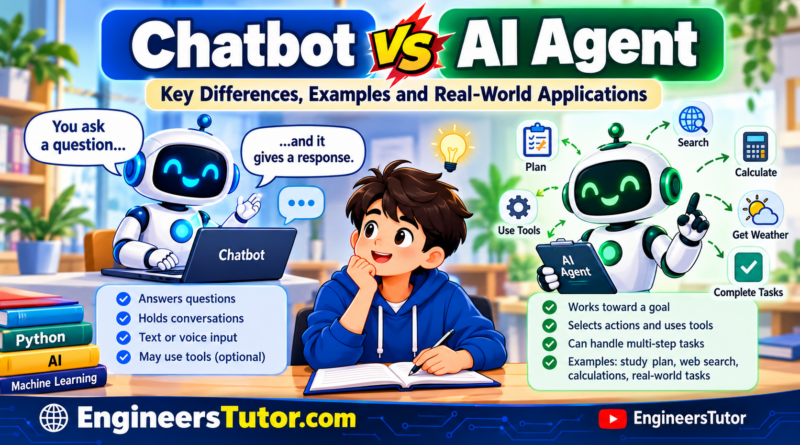
Learn the difference between a chatbot and an AI Agent with simple examples, easy explanations, colorful diagrams, and a beginner-friendly Python project.
Read more
Learn the difference between a chatbot and an AI Agent with simple examples, easy explanations, colorful diagrams, and a beginner-friendly Python project.
Read more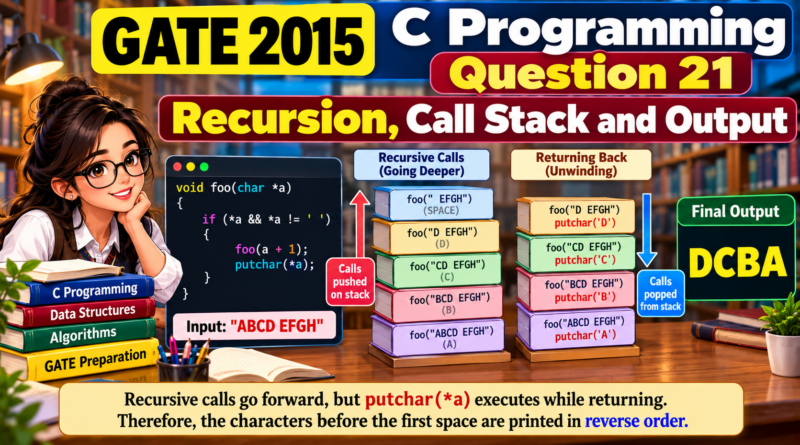
Learn how recursion, the function call stack, LIFO, and putchar() work together to solve GATE 2015 C Programming Question 21. Step-by-step explanation shows why the output is DCBA.
Read more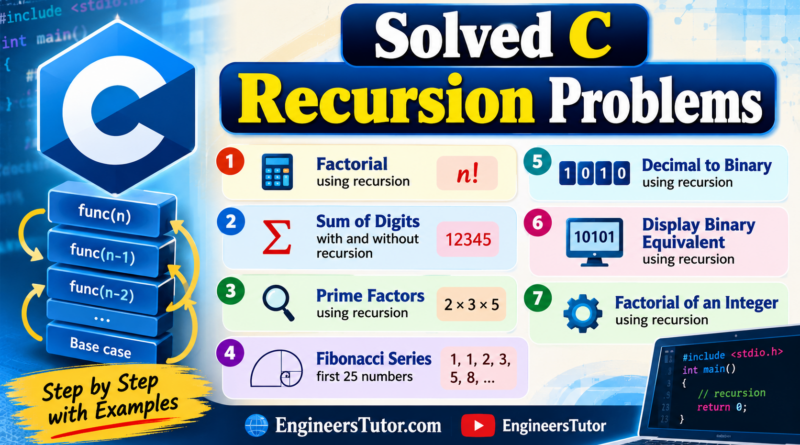
Learn recursion in C with solved problems on factorial, sum of digits, prime factors, Fibonacci series, and decimal-to-binary conversion. Each problem includes a simple recursive solution and explanation.
Read more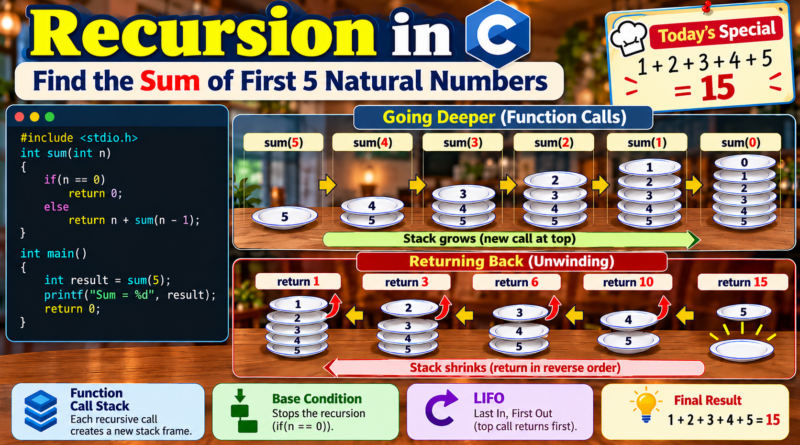
Learn recursion in C with a simple example of finding the sum of the first 5 natural numbers. Understand recursive functions, base conditions, function call stacks, LIFO, and how recursive calls return through unwinding.
Read more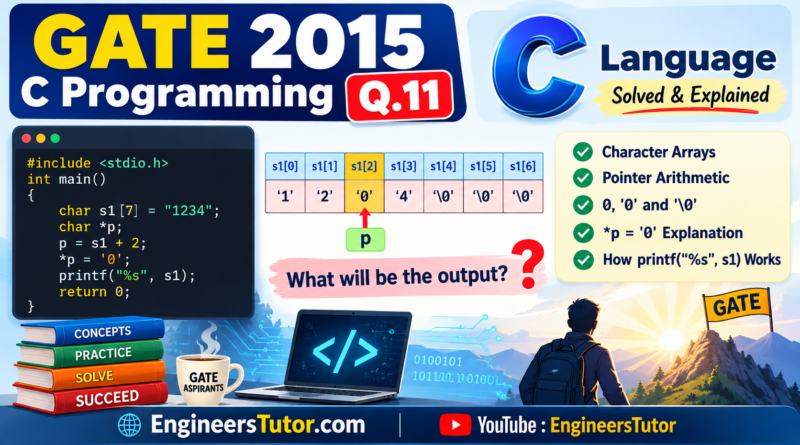
Learn how to solve GATE 2015 C Programming Question 11 using character arrays, pointer arithmetic, dereferencing, 0, ‘0’, ‘\0’, and printf(“%s”) with a clear step-by-step explanation.
Read more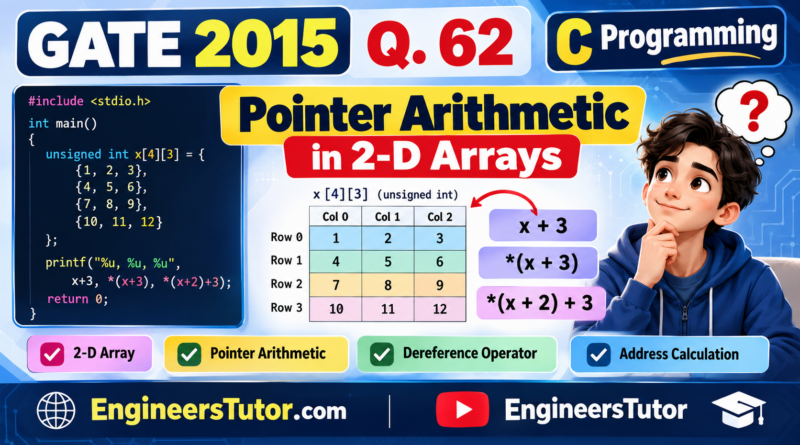
Learn how pointer arithmetic works with 2-D arrays in C using GATE 2015 Question 62. Understand array indexing, row pointers, memory addresses, dereferencing, and expressions such as x+3, *(x+3), and *(x+2)+3 with simple step-by-step explanations.
Read more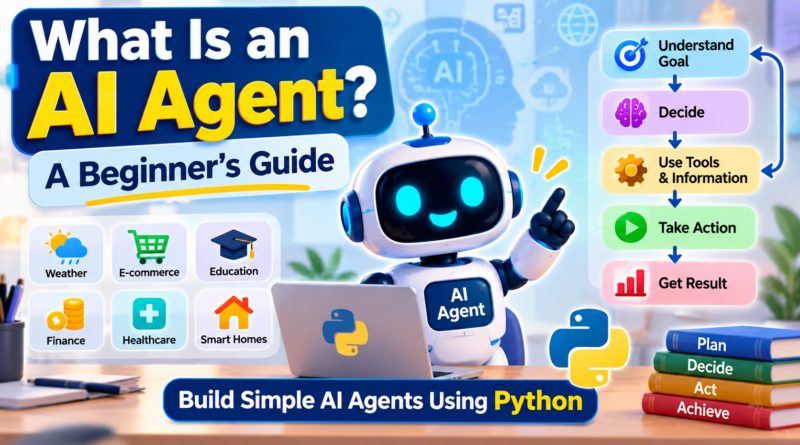
Learn what an AI Agent is, how it works, how it differs from a chatbot, where AI Agents are used, and how you can gradually build simple AI Agents using Python.
Read more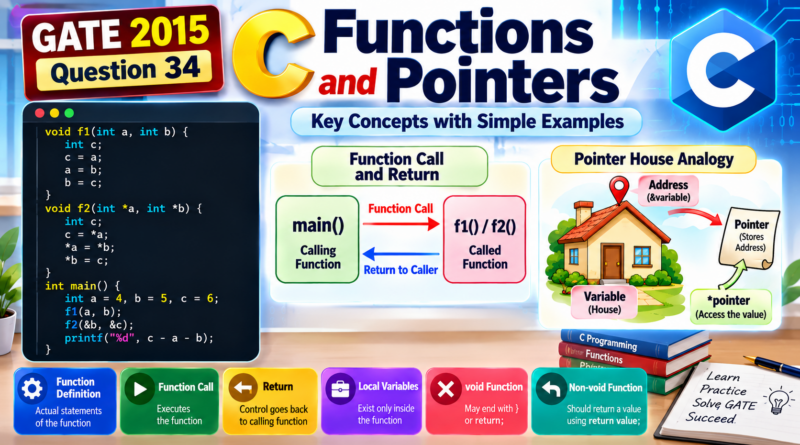
Learn how to solve GATE 2015 Question 34 using simple step-by-step tracing. This C programming question covers functions, pass-by-value, pointers, local variables, and modifying values using addresses. The final answer is -5.
Read more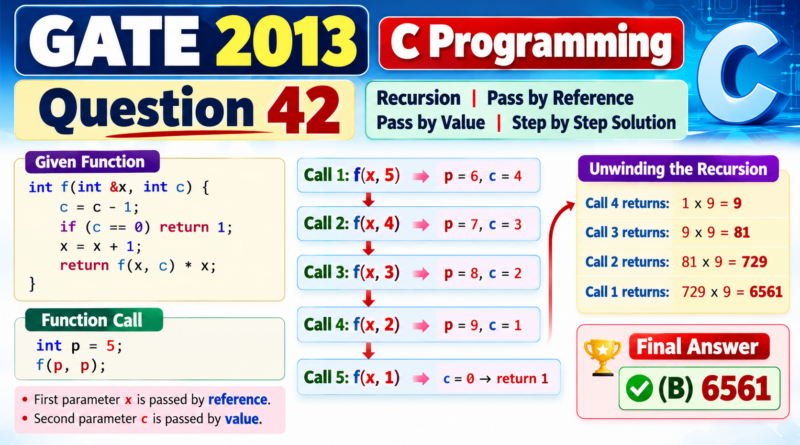
Learn how to solve GATE 2013 C Programming Question 42 using recursion, pass-by-reference, and pass-by-value. Trace each recursive call step by step and understand how the final answer 6561 is obtained.
Read more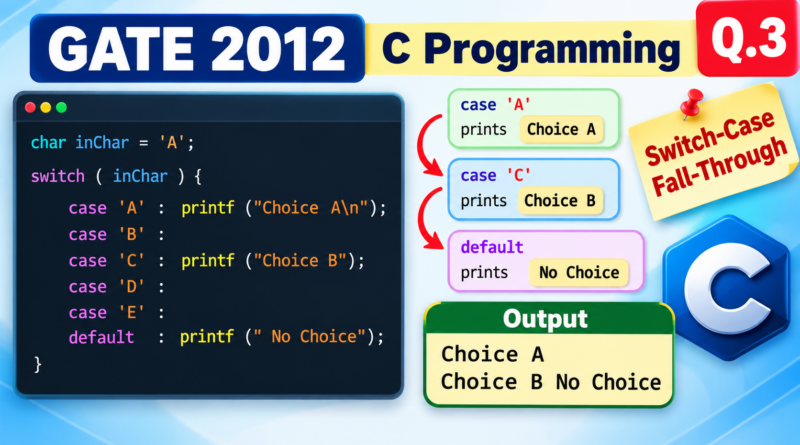
Solve GATE 2012 C Programming Question 3 step by step. Learn how switch-case fall-through works when break statements are absent and understand why the correct answer is Option (C).
Read more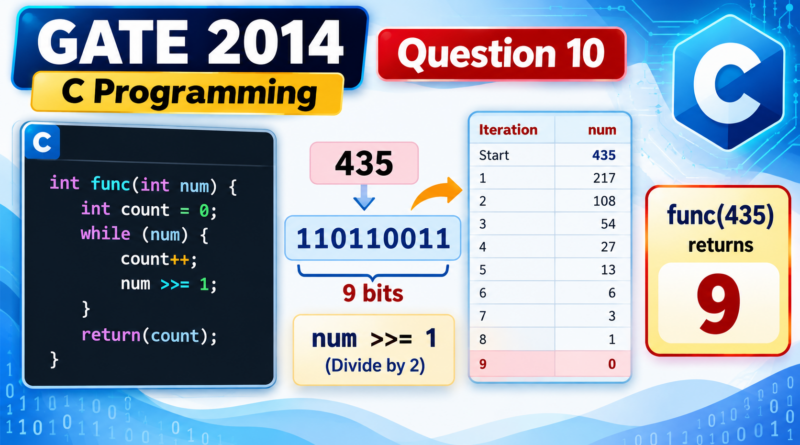
Solve GATE 2014 C Programming Question 10 step by step. Learn how the right-shift operator >>= 1 works, convert 435 to binary, trace the loop, and find why func(435) returns 9.
Read more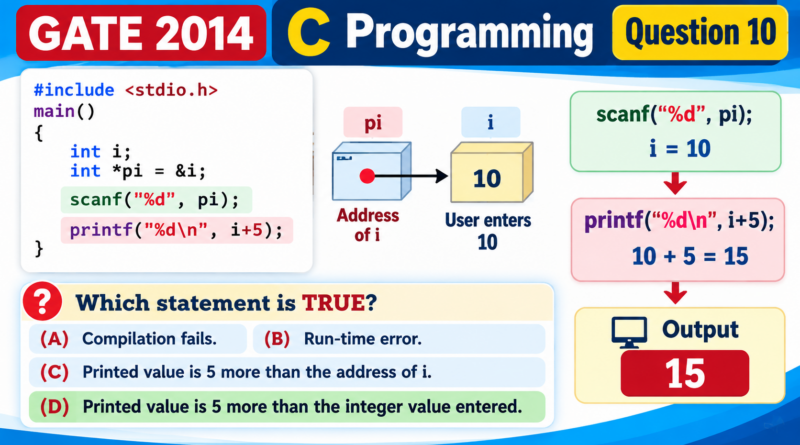
Solve GATE 2014 C Programming Question 10 step by step. Learn how pointers, scanf(), and printf() work together, and understand why the correct answer is (D).
Read more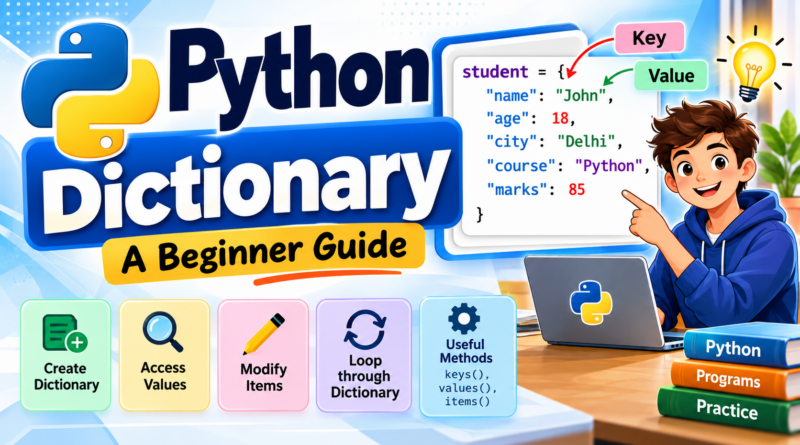
Learn Python dictionaries from the basics with simple examples and practice programs. Understand key-value pairs, how to create, access, add, change and remove items, use dictionary methods, loop through dictionaries, and build a simple student information program.
Read more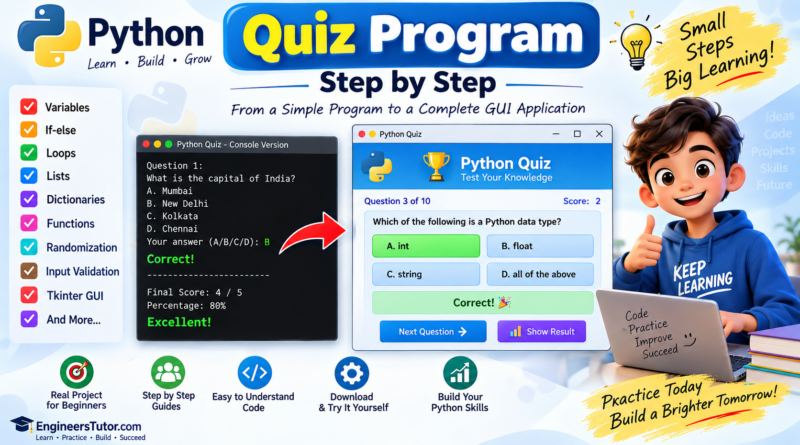
Learn how to build a Quiz Program in Python step by step. Start with a simple console quiz and gradually add loops, functions, lists, dictionaries, scoring, random questions, input validation, and Tkinter GUI features to create a complete quiz application.
Read more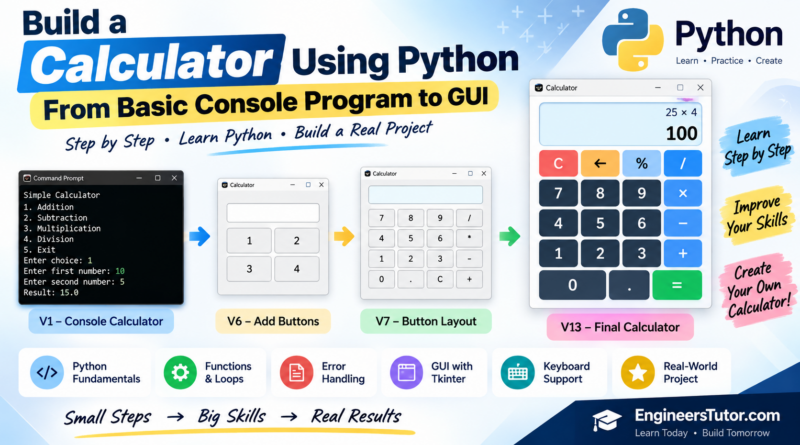
Learn how to build a calculator using Python step by step. Start with a simple console calculator and gradually develop it into a GUI application using Tkinter. Along the way, learn Python fundamentals, functions, loops, error handling, GUI widgets, callbacks, and keyboard events.
Read more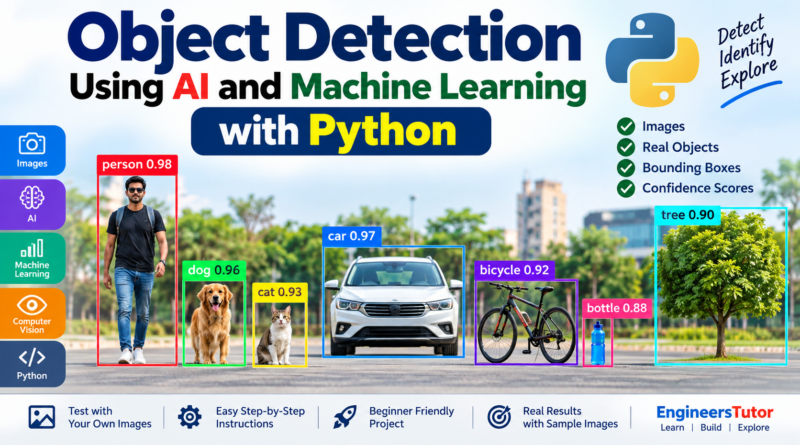
Learn how to build and test a simple object detection application using Python, AI, and machine learning. Follow the practical steps to install the required packages, run the project, detect objects in images, and understand bounding boxes, labels, and confidence scores.
Read more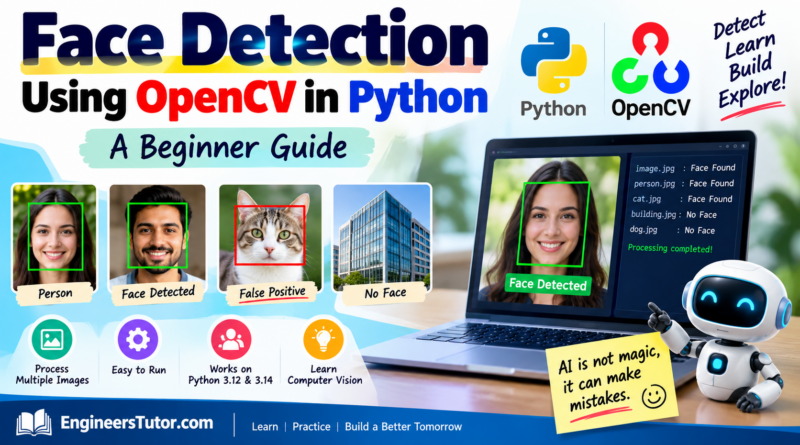
Learn how to build a simple face detection project using OpenCV and Python. This beginner-friendly guide explains how to install OpenCV, process multiple images, detect human faces, run the project on Python 3.12 or 3.14, and understand why face detection models can sometimes produce false positives.
Read more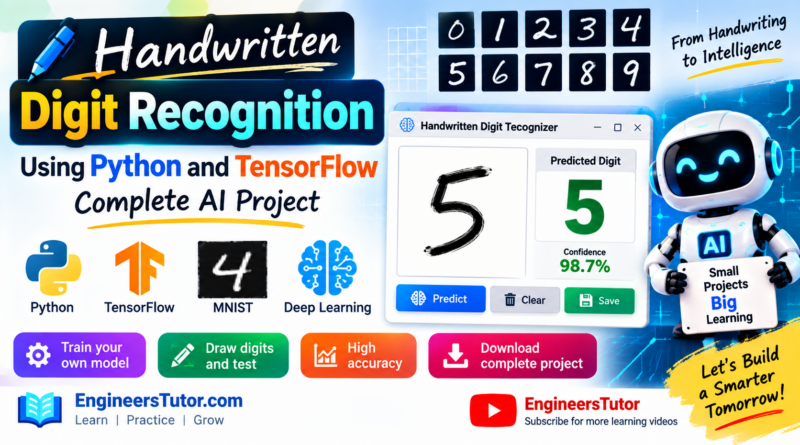
Learn how to build a Handwritten Digit Recognition system using Python, TensorFlow, CNN, and the MNIST dataset. Download the complete project, train the AI model, and test it using an interactive drawing canvas.
Read moreLearn how to use the Python while loop with this beginner-friendly guide. Understand its basic syntax, condition, initialization, update, counting patterns, step values, and simple practice programs.
Read moreLearn how to use the Python for loop with the range() function. This beginner-friendly guide explains the basic syntax, three forms of range(), start, stop and step values, with simple examples and practice questions.
Read moreSubscribe to get our latest programming, AI, GATE, and educational tutorials directly in your inbox.
No spam, ever. Unsubscribe at any time.
Thanks for joining EngineersTutor. Please check your inbox and confirm your subscription.