Python Simple Programs – Part 1

Learn how to write a simple Python program to convert temperature from Fahrenheit to Celsius. This beginner-friendly example demonstrates user input, float(), arithmetic operations, conversion formulas, and formatted output.

Read more
Python input() Function – A Complete Beginner’s Guide

Learn the Python input() function from scratch. Understand how to take user input, store it in variables, convert text to numbers, use int() and float(), take multiple inputs, and create practical beginner-friendly Python programs.

Read more

Python Data Types Explained with Examples – A Beginner’s Guide

Learn Python Data Types from the basics with simple examples and visual screenshots. Understand int, float, complex, bool, string, list, tuple, set, dictionary, NoneType, type(), and type conversion in an easy beginner-friendly guide.

Read more

Python Keywords – Beginner’s Guide with Examples

Learn Python keywords from the basics with simple examples, keyword checking programs, practical exercises, and comparisons with C, C++ and Java. Understand keywords, identifiers, built-in functions, and how to find Python keywords in your own Python installation.

Read more

Python Lists: Modifying, Adding, Removing Objects & Quick Practice Programs

Lists Can Be Modified Python lists are mutable. Mutable means that we can change the objects stored in a list

Read more

Python Lists Explained: Objects, Data Types, and Nested Lists with Examples

A List Can Contain Integer Objects A list can contain integer objects. numbers = [10, 20, 30, 40, 50] print(numbers)

Read more

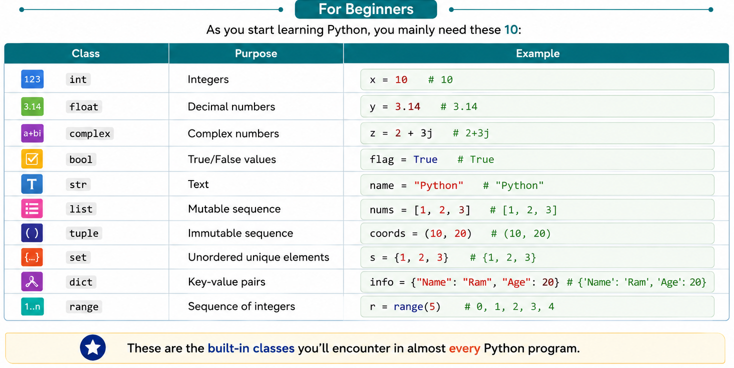
Python Built-in Classes – Simple Guide for Beginners

Python provides many built-in classes that make programming easier. In this beginner-friendly tutorial, you’ll learn what a built-in class is, how Python’s approach differs from C, C++, and Java, and how commonly used classes such as int, float, str, list, tuple, set, and dict are used. You’ll also get a simple introduction to Python’s object-oriented approach and understand how values are represented as objects.

Read more

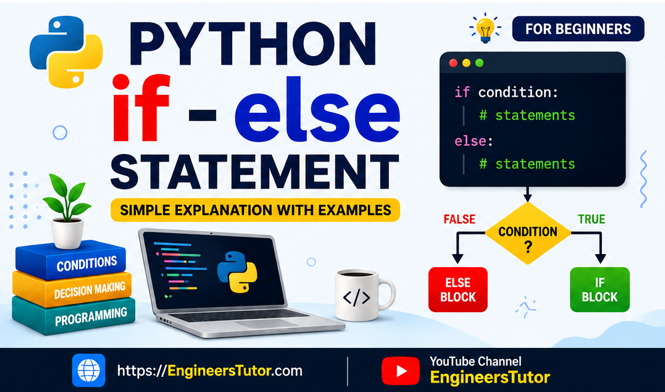
Python if-else Statement – Simple Explanation with Examples

Learn Python if-else statements with simple explanations and practical examples. Understand conditions, True and False, relational operators, and Python indentation with easy-to-follow programs.

Read more

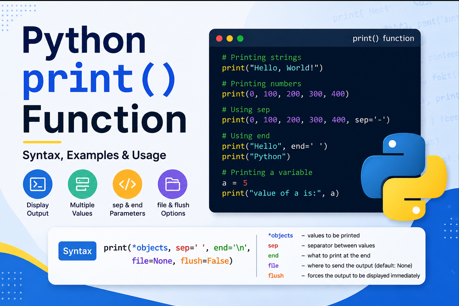
Python print() Function – Syntax, Examples and Usage

The print() function is one of the most commonly used and important functions in Python. It is generally used to

Read more
Translate »