🎓 ENGINEERSTUTOR · ONLINE TUITION
Learn Programming with Personal Guidance
Build your skills with personalized online coaching in Programming & Engineering.
💻
C / C++ / MATLAB
Programming Basics
🐍
Python
Programs & Concepts
☕
Java
Object-Oriented Programming
🔌
Embedded
8051 · 8085 · 8086
📡
Engineering
Comm. Systems
✨ Experience the teaching style before you enrol.
Suitable for school students and college learners.
📝 Request a FREE Demo Class   →
ENGINEERSTUTOR.COM

Python range() Function: Syntax, Examples & Practice Programs

Master Python’s built-in range() function in this complete guide. Learn how to generate sequences of numbers efficiently using start, stop, and step parameters, explore practical for loop examples, and test your skills with hands-on practice programs.

Read more
Python for Loop: Purpose, Syntax, and Examples with Lists

Learn how to automate repetitive tasks in Python using the for loop. This guide breaks down why for loops are essential for clean code, explains their core syntax, and provides practical, beginner-friendly examples showing how to iterate through and manipulate Python lists.

Read more

Python Lists: Modifying, Adding, Removing Objects & Quick Practice Programs

Learn how to master Python lists by modifying existing elements, adding new items with append() and insert(), and removing data using remove(). Includes beginner-friendly examples and quick practice programs to test your skills.

Read more

Python Lists Explained: Ordering, Indexing, Negative Indexing and len()

Master the fundamentals of Python lists in this beginner-friendly guide. Learn how Python preserves item order, how to access elements from the front using zero-based indexing, how to grab items from the back with negative indexing, and how to quickly measure list size using the len() function.

Read more

Python Lists Explained: Objects, Data Types, and Nested Lists with Examples

Master Python lists from the ground up. Learn how lists store objects, handle mixed data types, and structure complex data using nested lists—complete with practical code examples.

Read more

Python Lists: A Simple Introduction for Beginners

Lists are one of the most useful tools in Python for storing and organizing multiple items in a single variable. In this beginner-friendly guide, you’ll learn how to create, access, and modify Python lists with simple, real-world examples—no prior coding experience required.

Read more

Periodic and Non-Periodic Signals – Questions and Solutions

Q1. What is the fundamental period of the waveform shown below figure? Sol: The given signal is a triangular wave

Read more

Periodic and Non-Periodic Signals | Course: Signals & Systems

Periodic Signal Periodic Signal:A signal which repeats itself after a fixed time period is called a periodic signal. Condition of

Read more

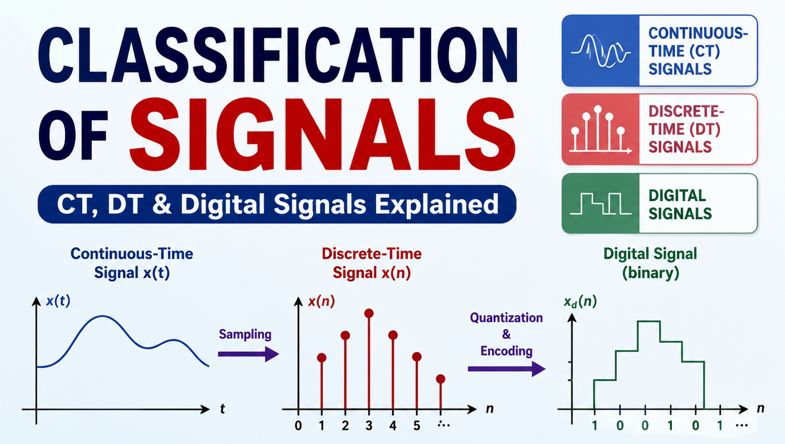
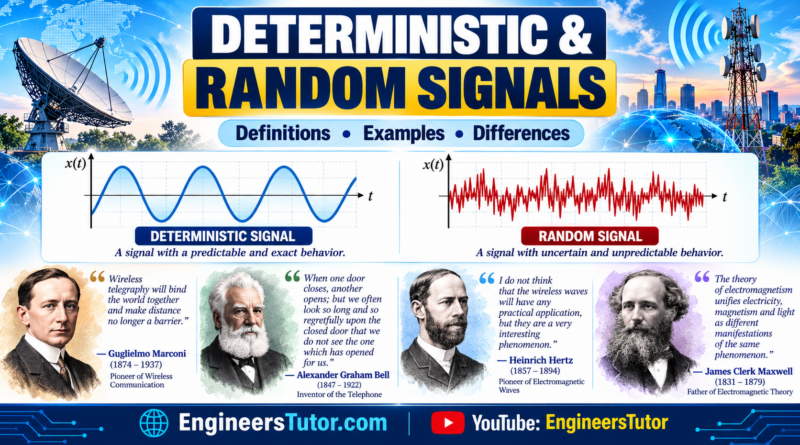
Deterministic and Random Signals – Definition, Examples & Differences

Learn the difference between deterministic and random signals with simple definitions, examples, waveforms, key characteristics, and real-world applications. Understand how predictable deterministic signals differ from uncertain random signals in Signals and Systems.

Read more

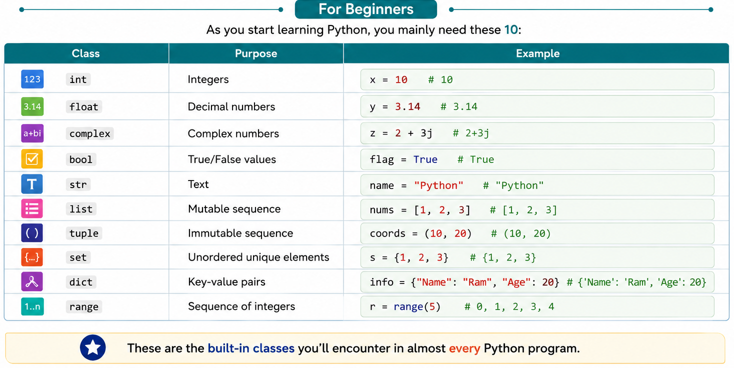
Python Built-in Classes – Simple Guide for Beginners

Python provides many built-in classes that make programming easier. In this beginner-friendly tutorial, you’ll learn what a built-in class is, how Python’s approach differs from C, C++, and Java, and how commonly used classes such as int, float, str, list, tuple, set, and dict are used. You’ll also get a simple introduction to Python’s object-oriented approach and understand how values are represented as objects.

Read more

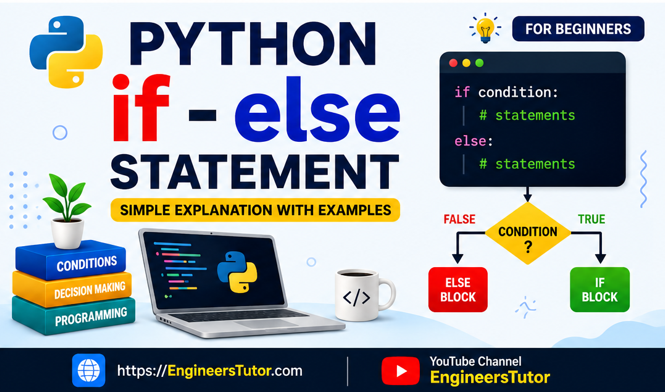
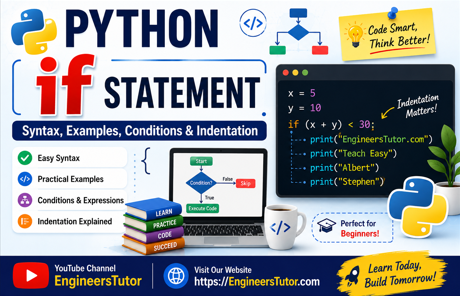
Python if-else Statement – Simple Explanation with Examples

Learn Python if-else statements with simple explanations and practical examples. Understand conditions, True and False, relational operators, and Python indentation with easy-to-follow programs.

Read more

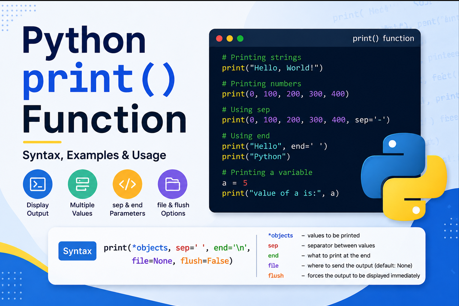
Python print() Function – Syntax, Examples and Usage

Master the fundamentals of outputting data in Python with this complete guide to the print() function. Learn its exact syntax, explore optional parameters like sep and end, and follow practical code examples to display text, variables, and formatted output in your programs.

Read more
Translate »